
Drawn and Quartered
An Alliterative Poem

Usually, I would be posting my poetry within “The Journal of Charlotte Balladine”. However, on this occasion, the alliterative poem structured in alignment with Old English verse is perhaps better placed amoungst translations.
One of the most frustrating experiences I have endured thus far is the difficulty in translating alliterative verse from Old English. The poets of the period would structure the most brilliant verse by creating a cesura identified by the notable use of alliteration on either side of the break. An example from “The Wife’s Lament” below:
“Iċ þis ġiedd wrece bi mē ful ġeōmorre,
mīnre sylfre sīð. Iċ þæt secgan mæġ,
hwæt iċ yrmþa ġebād, siþþan iċ ūp wēox,
nīwes oþþe ealdes, nō mā þonne nū.”
In my failed attempt thus far at finding an effective way of preserving the alliteration while staying true to the text, I have written an alliterative poem within this Old English structure as a homage to the brilliance of the original writers. I exaggerated the mirrored nature of the alliteration within this modern verse, mainly to pay all the more respect to the form.
(I have included screenshots of my poem as Substack, God bless, was not co-operating with my spacing).
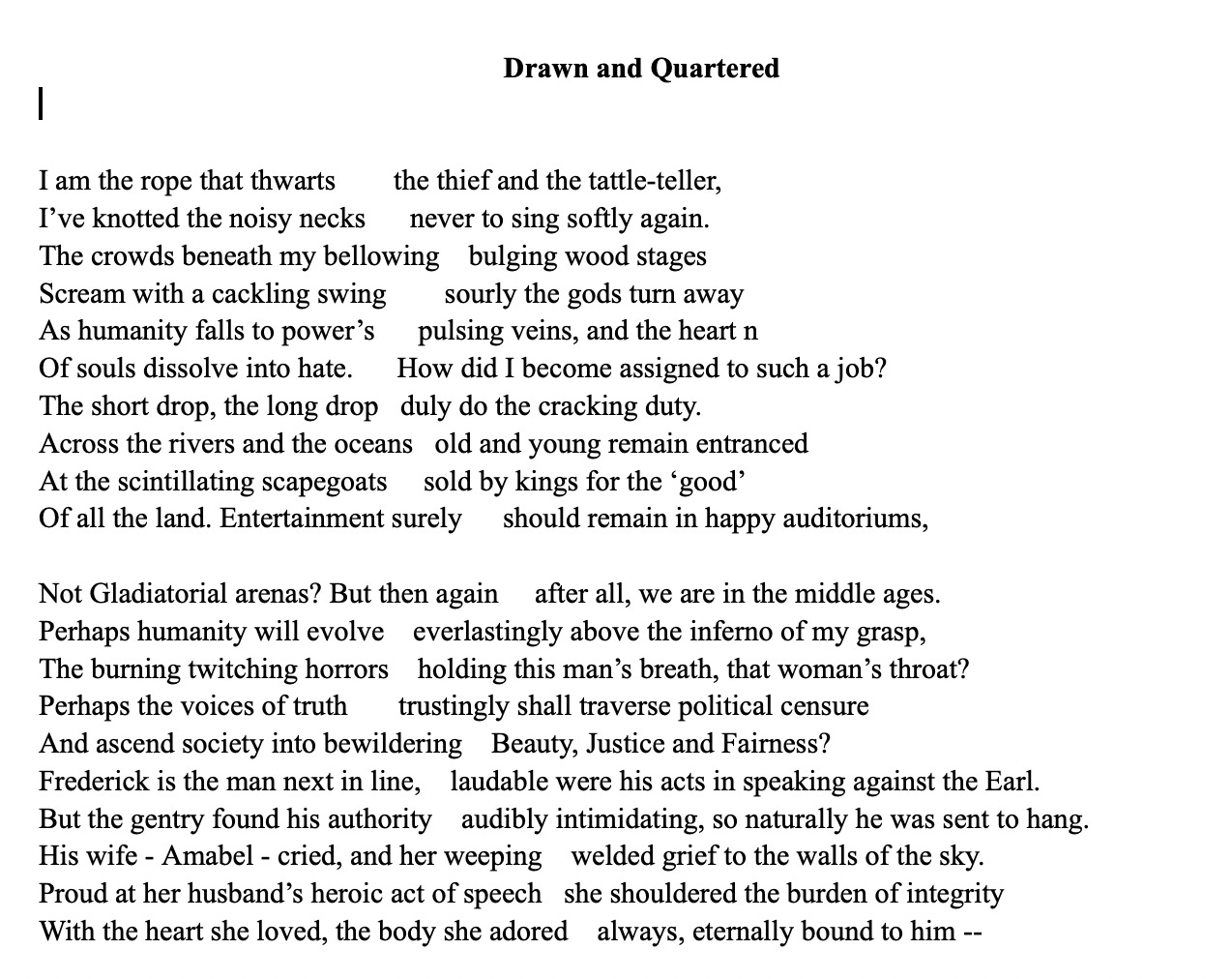
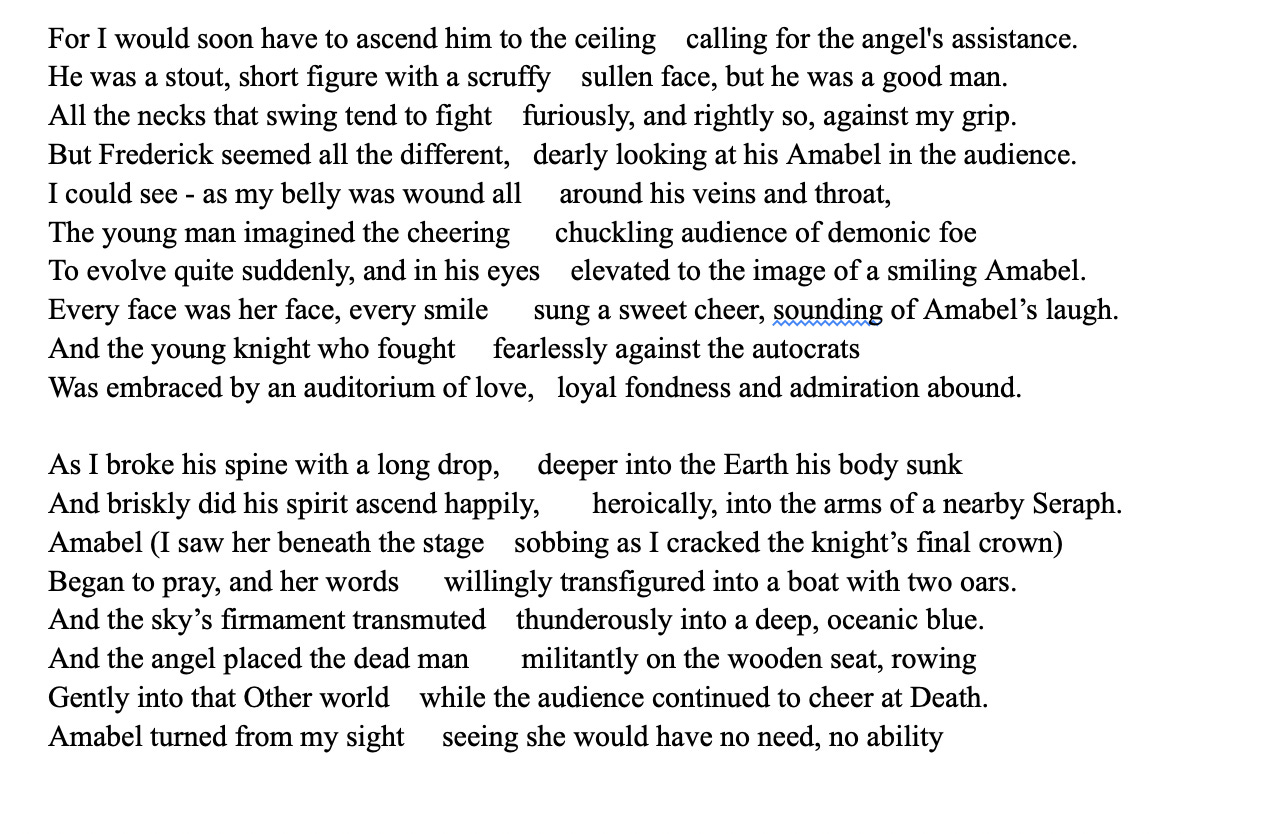

In alignment with the paganistic animism within Old English poetry, the rope is personified in the text. Such examples of this animism can be seen in Dream of the Rood. The overarching warriorship, conceptual depictions of scapegoating, and grief are ever-present in the Old English corpus, and are thus included within Drawn and Quartered.
A relative side-note, I did venture into the unknown and submit this poem to over 10 competitions and journals. However, as I suppose can be understood within the post-modern world, the poem has remained unsuccessful. I therefore assume responsibility over its publication, and send the poesy into the world via letter to you, dear reader.

Love this!
Oh, this is mighty!